Concrete surfaces, whether driveways, patios, sidewalks, or garage floors, are prone to accumulating dirt, grime, oil stains, mold, mildew, and other contaminants over time. While concrete is a durable material, its porous nature makes it susceptible to staining and discoloration, which can detract from the overall appearance of your property. Power washing is one of the most effective methods for restoring concrete surfaces to their original condition. However, achieving professional-quality results requires more than simply pointing a power washer at the surface. In this article, we’ll explore effective techniques for power washing concrete surfaces, ensuring you achieve optimal cleanliness while avoiding potential damage.
Why Power Washing is Ideal for Concrete
Power washing uses high-pressure water streams to remove dirt, grease, and other stubborn substances from surfaces. For concrete, this method offers several advantages:
- Deep Cleaning: The force of the water penetrates pores in the concrete, dislodging embedded dirt and contaminants.
- Versatility: Power washers can tackle a variety of stains, from organic growths like moss and algae to chemical residues like oil and grease.
- Efficiency: Compared to manual scrubbing or chemical treatments alone, power washing delivers faster and more consistent results.
- Eco-Friendly Options: When paired with biodegradable detergents, power washing minimizes environmental impact.
However, improper technique can lead to surface damage, such as etching, discoloration, or even structural weakening. Understanding the right approach is essential for preserving the integrity of your concrete while achieving a pristine finish.
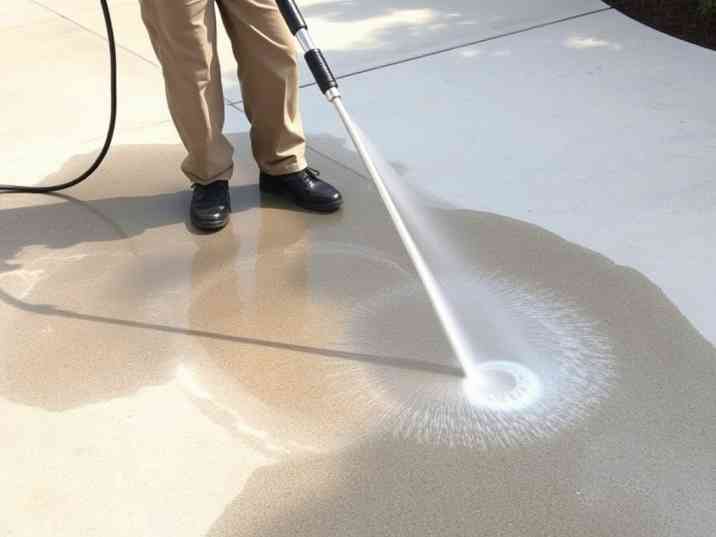
Preparation: The Foundation of Success
Before beginning the power washing process, thorough preparation is crucial to ensure safety and effectiveness.
1. Clear the Area
Remove any obstacles, such as furniture, potted plants, or vehicles, from the concrete surface. This prevents accidental damage and allows for unobstructed access during cleaning.
2. Inspect the Surface
Walk around the area to identify problem spots, such as oil stains, mold patches, or cracks. Pay attention to the type of stain, as different contaminants may require specific cleaning agents or techniques.
3. Protect Surroundings
Cover nearby plants, shrubs, and electrical components with tarps or plastic sheets to shield them from water and detergent runoff. Use painter’s tape to seal windows and doors to prevent water infiltration.
4. Choose the Right Equipment
Select a power washer with adjustable pressure settings (typically between 2,000–3,000 PSI for concrete) and interchangeable nozzles. Avoid using excessively high pressure, as it can damage the surface.
5. Gather Supplies
In addition to the power washer, gather the following:
- Eco-friendly cleaning agents or degreasers
- Stiff-bristled brush for pre-treatment of tough stains
- Safety gear, including goggles, gloves, and non-slip boots
- Garden hose for rinsing
Step-by-Step Power Washing Process
Once the preparation is complete, follow these steps to effectively clean your concrete surfaces:
1. Pre-Treat Stains
For heavily soiled areas, pre-treatment is essential to loosen stubborn contaminants before power washing:
- Oil and Grease Stains: Apply a degreaser or eco-friendly solvent to the affected area. Allow it to sit for 10–15 minutes to break down the grease.
- Mold and Mildew: Use a bleach-based or oxygenated cleaner to kill spores. Scrub lightly with a stiff-bristled brush if necessary.
- Rust Stains: Use a rust remover specifically formulated for concrete. Avoid acidic cleaners, as they can damage the surface.
2. Adjust the Pressure Washer
Set the power washer to the appropriate pressure level based on the condition of the concrete:
- Light Cleaning: 1,500–2,000 PSI for routine maintenance.
- Moderate Cleaning: 2,000–2,500 PSI for removing dirt and mild stains.
- Heavy-Duty Cleaning: 2,500–3,000 PSI for tackling oil stains, graffiti, or deeply embedded grime.
Choose the correct nozzle:
- 0-Degree Nozzle: High-pressure stream for tough stains; use sparingly to avoid damage.
- 15-Degree Nozzle: Ideal for general cleaning tasks.
- 25-Degree Nozzle: Best for delicate surfaces or light cleaning.
- 40-Degree Nozzle: Low-pressure setting for rinsing or final touch-ups.
3. Start from the Top
Begin at the highest point of the surface and work your way down. This prevents dirty water from dripping onto already-cleaned areas, ensuring an even finish.
4. Maintain Proper Distance
Hold the nozzle 12–18 inches away from the surface to avoid etching or damaging the concrete. Adjust the distance based on the nozzle type and pressure level. For heavily stained areas, move closer gradually to increase cleaning power without causing harm.
5. Use Sweeping Motions
Move the wand steadily in side-to-side or up-and-down motions to ensure even coverage. Avoid lingering in one spot for too long, as this can create streaks or uneven patterns.
6. Rinse Thoroughly
After cleaning, switch to a low-pressure rinse nozzle to remove all traces of detergent and debris. Ensure no residue remains, as it can attract dirt and lead to future staining.
Advanced Techniques for Stubborn Stains
Some stains require additional effort beyond standard power washing. Here are advanced techniques for tackling common challenges:
1. Oil and Grease Removal
Oil stains are among the most difficult to remove from concrete. Follow these steps:
- Apply a degreaser liberally to the stained area.
- Let it sit for 15–30 minutes to penetrate the pores.
- Scrub the area with a stiff-bristled brush.
- Power wash using a 15-degree nozzle to lift the grease from the surface.
- Repeat the process if necessary.
2. Mold and Mildew Elimination
Mold and mildew thrive in damp environments and can spread quickly if not addressed. To eliminate these contaminants:
- Use a bleach-based cleaner diluted with water (1:3 ratio).
- Spray the solution onto the affected area and let it sit for 10 minutes.
- Power wash with a 25-degree nozzle to remove spores and prevent regrowth.
3. Rust Stain Treatment
Rust stains often result from metal objects left on concrete surfaces. To remove them:
- Apply a rust remover designed for concrete.
- Allow it to sit for the recommended time (usually 10–20 minutes).
- Scrub gently with a brush.
- Power wash using a 15-degree nozzle to lift the stain.
Post-Cleaning Care
Once the power washing is complete, take the following steps to maintain the cleanliness and longevity of your concrete surfaces:
1. Allow Proper Drying
Ensure the concrete dries completely before placing furniture or other items back on the surface. This reduces the risk of mold or mildew growth.
2. Apply a Sealer
To protect your concrete from future stains and weathering, consider applying a high-quality sealer. Sealers fill pores in the concrete, making it less absorbent and easier to clean in the future.
3. Dispose of Wastewater Responsibly
Avoid letting wastewater flow into storm drains, as it may contain harmful chemicals or debris. Collect and dispose of it according to local regulations.

Common Mistakes to Avoid
Even experienced users can make mistakes when power washing concrete. Here are some pitfalls to watch out for:
- Using Excessive Pressure: High PSI levels can etch or pit the surface, especially on older or weaker concrete.
- Neglecting Surface Preparation: Failing to clear debris or protect sensitive areas can lead to costly repairs.
- Skipping Rinsing: Leaving detergent residue on the surface attracts dirt and accelerates staining.
- Improper Waste Disposal: Allowing wastewater to enter storm drains violates environmental regulations and harms ecosystems.
Tips for Long-Term Maintenance
To keep your concrete surfaces looking their best, incorporate regular maintenance into your routine:
- Sweep Regularly: Remove loose dirt and debris to prevent buildup.
- Address Stains Immediately: Clean spills and stains as soon as they occur to prevent them from setting.
- Schedule Annual Power Washing: A yearly deep clean helps maintain the appearance and durability of your concrete.
- Monitor for Cracks: Repair cracks promptly to prevent water infiltration and further damage.
Conclusion
Power washing is a highly effective method for restoring and maintaining concrete surfaces, but success depends on proper technique and attention to detail. By following the steps outlined in this guide—preparing the area, adjusting equipment settings, using appropriate cleaning agents, and avoiding common mistakes—you can achieve professional-quality results that enhance the appearance and longevity of your concrete.
Whether you’re cleaning a driveway, patio, or commercial space, mastering these techniques ensures your concrete surfaces remain clean, safe, and visually appealing. With regular care and maintenance, you’ll enjoy years of beauty and functionality from your investment.